Ok, so now that our future is settled for the moment, I thought I'd return to the India and Nepal Edition. But since I've already been back for over a month, I thought that India would best be summed up rather than expounded upon. Although India was a great experience and I hope to spend more time there, Nepal was much more personal and engaging. In many ways, India reminded me of a louder, busier, more western Kabul. India feels like an old country working to enter the 21st century; there is a campaign to be a "modern" city by the Commonwealth games in 2010, they have a lot of work to do.
In India, we visited Delhi and Jaipur. Delhi is a very large, very bustling city with thousands of sights, millions of people, and a rich and varied past. As a history lover, it was interesting to see (or drive by, we didn't have much chance to sight see) monuments of British Imperialism next to Islamic minarets and Hindu temples. There are tombs and temples that are hundreds, sometimes thousands of years old. Like Afghanistan, Delhi and most of India has been a part of several different empires throughout its history. In fact, Delhi was once ruled by Afghans and seems to have more intact tombs, mosques and palaces from the Afghan period than Afghanistan has.
When I pictured India before visiting, Jaipur is what I imagined. Jaipur's history includes tales of the maharajas and maharanis. The area has an exotic feel to it. Elephants and camels pull carts and men wear oversized red turbans. There are beautiful palaces and forts throughout the city, some still in use, some converted into hotels. And the whole city is painted a rusty pink, hence the nickname "The Pink City."
There were a few highlights from my time in India. One was getting to drink great coffee at a real coffee bar. One of them was eating a fancy dinner with the ladies. Another was swimming in the hotel swimming pool. But on a more serious note, we were able to visit Gandhi's Memorial, the platform on which he was cremated, on the Indian holiday celebrating his birth and life. I have a tremendous amount of admiration and respect for Gandhi. His motto, "Be the change you wish to see in the world," has become one of Joey and my life goals (and one of the reasons we move to places like Kabul!). It was very inspiring to see people from all over the world and of all different religions honoring this man who promoted peace, love, and positive change. It reminds me that regardless of creed or personal belief, there are certain things that we should all be committed to working towards together.
Wednesday, November 19, 2008

Tuesday, November 18, 2008
Friday, November 14, 2008
Worry.
As I write this, a very important meeting is going on in Virginia concerning our future here in Afghanistan. Although I've known that this meeting was coming, I didn't want to say anything about it. Mainly because all of us here really want to stay. And we're all very uncertain whether we will be able to or not. But for some reason, I felt that saying that we might leave Kabul would make it feel more real. . . and it does.
I have to admit that I am nervous about finding out the verdict. And I think that it's ok to be a little bit nervous. But at the same time, life is full of uncertainty (I feel like I'm learning a lot about uncertainty these days!). And in a sense, we always live in the uncertain no matter how "secure" our lives are. Bottom line, despite my desire to stay here in Kabul, despite the uncertainties that the future holds, and despite this feeling that I have that my life is in constant change. . . I'm not going to worry.
Fittingly, our Book Group studied Matthew 6:25-34 yesterday. For a group of people that live in a place in constant flux, it was a great reminder to all of us not to worry about tomorrow. Although we hope and pray that we will be able to stay here in Kabul, we're not going to worry while we wait for the verdict. Tomorrow will worry about itself.
I have to admit that I am nervous about finding out the verdict. And I think that it's ok to be a little bit nervous. But at the same time, life is full of uncertainty (I feel like I'm learning a lot about uncertainty these days!). And in a sense, we always live in the uncertain no matter how "secure" our lives are. Bottom line, despite my desire to stay here in Kabul, despite the uncertainties that the future holds, and despite this feeling that I have that my life is in constant change. . . I'm not going to worry.
Fittingly, our Book Group studied Matthew 6:25-34 yesterday. For a group of people that live in a place in constant flux, it was a great reminder to all of us not to worry about tomorrow. Although we hope and pray that we will be able to stay here in Kabul, we're not going to worry while we wait for the verdict. Tomorrow will worry about itself.
Monday, November 10, 2008
Afraid of the vacuum. . .
Taking a post break from The India and Nepal Edition.
My work laptop is afraid of the vacuum. Every morning at around 9:00, the cleaning lady vacuums the hallway outside my office. At about 9:05 my laptop suddenly shuts off and won't reboot until the vacuum is put away.
When I told the IT guys that I had a suspicion my laptops power problems were connected to the vacuum, they tried not to laugh, said my computer probably had a virus, and rebuilt it.
After the rebuild, the power problems continued. So, Sami stood in my office while the vacuuming was running. . . and it didn't shut off. As soon as he walked out the door, it promptly died.
They thought it might be a problem with an electrical circuit. They bought me a heavy duty surge protector. And it died.
So, we decided that each day when the vacuum turned on, I would just unplug everything connected to my laptop, everything connected to a power source, and continue working. Although this would be a bit of a hassle, it would save the cost of buying a new laptop. Next day, I sit with my laptop completely unplugged as she begins to vacuum. And it died.
Obviously, my poor computer has had some sort of traumatic experience with vacuum cleaners in the past.
Today I arrived at work to find a shiny new laptop with all my files and work transferred over to it. And it's not afraid of the vacuum.
Although we had a good laugh about my vacuum-a-phobic computer, this is Afghanistan and situations like this are not that uncommon. Like the light switch that stops working, or all of a sudden starts to turn on the light in another room, or the shower that randomly loses all water pressure (conveniently right when you're all lathered up). Dangling wires, faulty electricity, no electricity, no internet. . . all things that we're quickly getting used to here. For now, I'm just happy that I won't have to be obsessive about hitting control "s" whenever I hear a vacuum.
My work laptop is afraid of the vacuum. Every morning at around 9:00, the cleaning lady vacuums the hallway outside my office. At about 9:05 my laptop suddenly shuts off and won't reboot until the vacuum is put away.
When I told the IT guys that I had a suspicion my laptops power problems were connected to the vacuum, they tried not to laugh, said my computer probably had a virus, and rebuilt it.
After the rebuild, the power problems continued. So, Sami stood in my office while the vacuuming was running. . . and it didn't shut off. As soon as he walked out the door, it promptly died.
They thought it might be a problem with an electrical circuit. They bought me a heavy duty surge protector. And it died.
So, we decided that each day when the vacuum turned on, I would just unplug everything connected to my laptop, everything connected to a power source, and continue working. Although this would be a bit of a hassle, it would save the cost of buying a new laptop. Next day, I sit with my laptop completely unplugged as she begins to vacuum. And it died.
Obviously, my poor computer has had some sort of traumatic experience with vacuum cleaners in the past.
Today I arrived at work to find a shiny new laptop with all my files and work transferred over to it. And it's not afraid of the vacuum.
Although we had a good laugh about my vacuum-a-phobic computer, this is Afghanistan and situations like this are not that uncommon. Like the light switch that stops working, or all of a sudden starts to turn on the light in another room, or the shower that randomly loses all water pressure (conveniently right when you're all lathered up). Dangling wires, faulty electricity, no electricity, no internet. . . all things that we're quickly getting used to here. For now, I'm just happy that I won't have to be obsessive about hitting control "s" whenever I hear a vacuum.
Thursday, November 6, 2008
The India and Nepal Edition: Mendies Haven and Shyam's Place
We live in a big world with big problems. Living in one of those problem places, I often find myself discouraged by the, "I'm just one person, what can I do?" line of thinking. But when I remember the Gandhis, Mother Teresas, William Wilberforces, and Greg Mortensons of the world, I have renewed hope in the individual's ability to make positive (and sometimes history altering) change.
Elizabeth "Mummy" Mendies was called the Mother Teresa of Nepal. A Canandian woman who had moved to the little known kingdom of Nepal with her husband in the 1960's, Elizabeth saw an enormous need to help the many abandoned and poor children wandering the streets of Kathmandu. Her desire to create a place of safety for children developed into an orphanage called Mendies Haven. Since it's beginning in the sixties, Mendies Haven has housed countless children. It's amazing to see the difference that love and care makes in a child's life. And in the center of all this love and care was this woman, Mummy, who everyone speaks of with huge smiles and admiration. She was one of those individuals that made a very big difference. Although Mummy died last August, seeing the smiling faces of 30+ children was an incredible testimony of her ministry to the overlooked of Kathmandu. And it is clear that Mendies Haven will continue to live on.
Shyam grew up at Mendies Haven. After going to Pensacola College in Florida and marrying a woman from Washington, he returned to Nepal to open another orphanage, knowing the impact that being taken in and cared for had on his life. While Mendies Haven feels like an established operation, Shyam's Place feels like a large family home. Between the boys and girls rooms is a family room where house parents live. Shyam's ministry includes a Nepali place of worship, a religious school, and the orphanage. When he speaks, his Hope is evident and his dreams for the future of Nepal seem almost tangible. As someone who has come from impossible circumstances, it's inspiring to see him provide what Mendies Haven gave him to future generations.
As part of a group of people committed to praying for Nepal, Nikki and her crew pray specifically for five "brothers" that grew up at Mendies Haven. Two of the brothers, Digamber and Bobby, acted as our friends and guides during our time in Nepal. One of the highlights of the trip was seeing these young men spend time with their younger brothers and sisters at Mendies and Shyams. We had planned an afternoon VBS for both orphanages. And while I struggled to channel my inner Kathy Pandiani and lead the games, Bobby took the reins and had all the kids running back and forth across the field playing "Ship to Shore" and freeze tag. The kids loved having their big brother playing with them. It was great seeing this family of siblings love on each other.
Through the work of Elizabeth Mendies and Shyam, I am reminded that normal people and people from the humblest beginnings can make a huge difference. Although the world may not recognize their names, these people have changed the world they live in. I am inspired and challenged to seek out ways that I can change the world.
(I'll post more pictures when I get them).
Elizabeth "Mummy" Mendies was called the Mother Teresa of Nepal. A Canandian woman who had moved to the little known kingdom of Nepal with her husband in the 1960's, Elizabeth saw an enormous need to help the many abandoned and poor children wandering the streets of Kathmandu. Her desire to create a place of safety for children developed into an orphanage called Mendies Haven. Since it's beginning in the sixties, Mendies Haven has housed countless children. It's amazing to see the difference that love and care makes in a child's life. And in the center of all this love and care was this woman, Mummy, who everyone speaks of with huge smiles and admiration. She was one of those individuals that made a very big difference. Although Mummy died last August, seeing the smiling faces of 30+ children was an incredible testimony of her ministry to the overlooked of Kathmandu. And it is clear that Mendies Haven will continue to live on.
Shyam grew up at Mendies Haven. After going to Pensacola College in Florida and marrying a woman from Washington, he returned to Nepal to open another orphanage, knowing the impact that being taken in and cared for had on his life. While Mendies Haven feels like an established operation, Shyam's Place feels like a large family home. Between the boys and girls rooms is a family room where house parents live. Shyam's ministry includes a Nepali place of worship, a religious school, and the orphanage. When he speaks, his Hope is evident and his dreams for the future of Nepal seem almost tangible. As someone who has come from impossible circumstances, it's inspiring to see him provide what Mendies Haven gave him to future generations.
 |
| From MH and Shyams |
 |
| From MH and Shyams |
As part of a group of people committed to praying for Nepal, Nikki and her crew pray specifically for five "brothers" that grew up at Mendies Haven. Two of the brothers, Digamber and Bobby, acted as our friends and guides during our time in Nepal. One of the highlights of the trip was seeing these young men spend time with their younger brothers and sisters at Mendies and Shyams. We had planned an afternoon VBS for both orphanages. And while I struggled to channel my inner Kathy Pandiani and lead the games, Bobby took the reins and had all the kids running back and forth across the field playing "Ship to Shore" and freeze tag. The kids loved having their big brother playing with them. It was great seeing this family of siblings love on each other.
Through the work of Elizabeth Mendies and Shyam, I am reminded that normal people and people from the humblest beginnings can make a huge difference. Although the world may not recognize their names, these people have changed the world they live in. I am inspired and challenged to seek out ways that I can change the world.
(I'll post more pictures when I get them).
Wednesday, October 29, 2008
India and Nepal Edition: Dance Party
In my opinion, the best way to get to know a place is to have someone you know show you around. Nikki knows Nepal, and she knows Nepalis who know Nepal. Not only did we have some built in friendships waiting for us (as in waiting with marigold necklaces at the airport), we also we had the best tour/culture guides for our time in Kathmandu.
So, we got the guided tour of Monkey Temple, the personal invite to the Newari festival, taxis hailed, drivers sent. . . we felt very taken care of and pretty darn VIP.
But nothing solidifies friendship like a spontaneous dance party. After a very hot day of VBS at Mendes Haven and Shyam's church, we (a little begrudgingly) accepted an invitation to have dinner with Shyam (different Shyam than above) and his wife Amrita at his family's home. First thing to note, Shyam and Amrita live in a massive house with his mother, five brothers, five sister-in-laws, and lots of nieces and nephews. This living arrangement is very common in Nepal. Second thing to note, dinner with Shyam and Amrita meant dinner with Shyam's family and the rest of our Nepali crew. And third, Shyam's older brother is not only a former Nepali boxing champion, he's also a Newari singer. And just like that, we're all standing in a circle being entreated to dance and sing.
"Good evening ladies and gentlemen. I would first like to say 'Namaste.'"
Sorry Nikki, no other photo displayed the absolute hilarity of the night.
Even the kids got in the circle.
Needless to say, it was a a very fun night. Out of all my experiences and adventures in Nepal (some I still need to share), this night was special. It was fun, funny, a little bit awkward, but above all it made me feel very much at home.
So, we got the guided tour of Monkey Temple, the personal invite to the Newari festival, taxis hailed, drivers sent. . . we felt very taken care of and pretty darn VIP.
 |
| From Dance party |
But nothing solidifies friendship like a spontaneous dance party. After a very hot day of VBS at Mendes Haven and Shyam's church, we (a little begrudgingly) accepted an invitation to have dinner with Shyam (different Shyam than above) and his wife Amrita at his family's home. First thing to note, Shyam and Amrita live in a massive house with his mother, five brothers, five sister-in-laws, and lots of nieces and nephews. This living arrangement is very common in Nepal. Second thing to note, dinner with Shyam and Amrita meant dinner with Shyam's family and the rest of our Nepali crew. And third, Shyam's older brother is not only a former Nepali boxing champion, he's also a Newari singer. And just like that, we're all standing in a circle being entreated to dance and sing.
 |
| From Dance party |
"Good evening ladies and gentlemen. I would first like to say 'Namaste.'"
 |
| From Dance party |
 |
| From Dance party |
 |
| From Dance party |
Even the kids got in the circle.
Needless to say, it was a a very fun night. Out of all my experiences and adventures in Nepal (some I still need to share), this night was special. It was fun, funny, a little bit awkward, but above all it made me feel very much at home.
Friday, October 17, 2008
The India Nepal Edition: Nepal Leprosy Trust
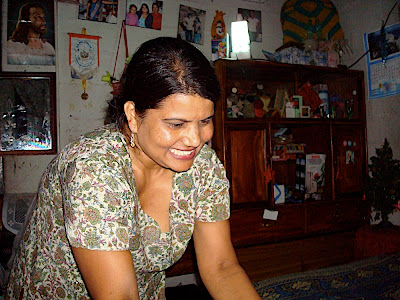
I met Suryakala at Nepal Leprosy Trust.
Through her contagious smile and constant laughter, she tells me about the blessings and hardships she's experienced during her life. As a young girl, she and two of her siblings were brought from their village to Kathmandu. The city was the best place to receive treatment for their leprosy and escape the negative social stigma placed on lepers in the rural areas of Nepal. So, at the age of nine, Suryakala left her home, her village, her two healthy siblings, her parents and moved to the leprosy hospital in Kathmandu. After a misdiagnosis two years early, the disease had progressed enough to do permanent nerve damage and would effect her the rest of her life.
She went on to tell me about meeting her husband, having her two daughters and working at Nepal Leprosy Trust. Suryakala smiles as she shares her life's hardships. With a tearful giggle she speaks of complications and nerve damage caused by leprosy, losing her husband after a misdiagnosis of hepatitis A, and living as a single mother with a marginalizing disease. She tells she smiles because me she doesn't worry about the future. She misses her husband but knows that he wouldn't want her to be sad. And she is happy. She has two beautiful daughters, a great job and safe place to live.
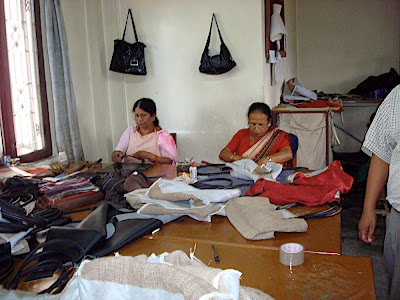
NLT taught Suryakala sewing skills, gave her husband a job, gave her a job, and even gave her and her daughters a place to live. She now works at NLT producing handbags at a fair trade wage. Her leprosy has been cured through a multi-drug treatment. She has had a few surgeries in the past few years to address some of the issues caused by nerve damage. But for the most part, her biggest worry is caring for her teenage daughters as they approach adulthood.
Since 1972, NLT has provided various services for people who have been socially, emotionally and economically marginalized by leprosy. Along with access to medical treatment, NLT helps defeat the stigmas associated with leprosy. It provides job and skills training to people that would otherwise have little hope or oppurtunity for any income. We were able to visit NLT and see their fair trade handbag production facility. Our plan was to tour the facility, have a luncheon with the artisans, and get a few interviews. After meeting and interviewing Suryakala, it became quite clear that one visit wouldn't be enough. She insisted that we come for tea later in the week and meet her daughters.
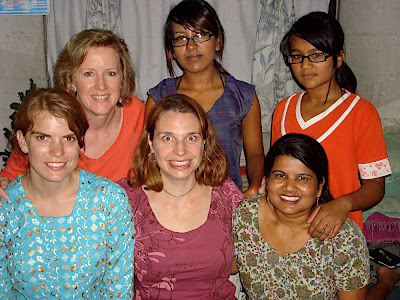
I am amazed at the joy that emanates from this woman. While serving us tea and momos (so many momos), she pointed out pictures of her husband and family. She had each of her girls tell us about their dreams and goals. And since I have returned to Kabul I have received two emails from Suryakala and her daughters.
One of the things I love about fair trade is that it provides avenues for a closer relationship between the consumer and the producer. I hope that my first visit to NLT was the beginning of a long friendship. I know that I can count on Suryakala's smiling face waiting for me when I return.
To view the handbags produced at NLT, please visit my friend Nikki at Jubilee Traders.
 |
| From NLT |
Through her contagious smile and constant laughter, she tells me about the blessings and hardships she's experienced during her life. As a young girl, she and two of her siblings were brought from their village to Kathmandu. The city was the best place to receive treatment for their leprosy and escape the negative social stigma placed on lepers in the rural areas of Nepal. So, at the age of nine, Suryakala left her home, her village, her two healthy siblings, her parents and moved to the leprosy hospital in Kathmandu. After a misdiagnosis two years early, the disease had progressed enough to do permanent nerve damage and would effect her the rest of her life.
She went on to tell me about meeting her husband, having her two daughters and working at Nepal Leprosy Trust. Suryakala smiles as she shares her life's hardships. With a tearful giggle she speaks of complications and nerve damage caused by leprosy, losing her husband after a misdiagnosis of hepatitis A, and living as a single mother with a marginalizing disease. She tells she smiles because me she doesn't worry about the future. She misses her husband but knows that he wouldn't want her to be sad. And she is happy. She has two beautiful daughters, a great job and safe place to live.
NLT taught Suryakala sewing skills, gave her husband a job, gave her a job, and even gave her and her daughters a place to live. She now works at NLT producing handbags at a fair trade wage. Her leprosy has been cured through a multi-drug treatment. She has had a few surgeries in the past few years to address some of the issues caused by nerve damage. But for the most part, her biggest worry is caring for her teenage daughters as they approach adulthood.
Since 1972, NLT has provided various services for people who have been socially, emotionally and economically marginalized by leprosy. Along with access to medical treatment, NLT helps defeat the stigmas associated with leprosy. It provides job and skills training to people that would otherwise have little hope or oppurtunity for any income. We were able to visit NLT and see their fair trade handbag production facility. Our plan was to tour the facility, have a luncheon with the artisans, and get a few interviews. After meeting and interviewing Suryakala, it became quite clear that one visit wouldn't be enough. She insisted that we come for tea later in the week and meet her daughters.
 |
| From NLT |
I am amazed at the joy that emanates from this woman. While serving us tea and momos (so many momos), she pointed out pictures of her husband and family. She had each of her girls tell us about their dreams and goals. And since I have returned to Kabul I have received two emails from Suryakala and her daughters.
 |
| From NLT |
One of the things I love about fair trade is that it provides avenues for a closer relationship between the consumer and the producer. I hope that my first visit to NLT was the beginning of a long friendship. I know that I can count on Suryakala's smiling face waiting for me when I return.
To view the handbags produced at NLT, please visit my friend Nikki at Jubilee Traders.
Subscribe to:
Posts (Atom)